
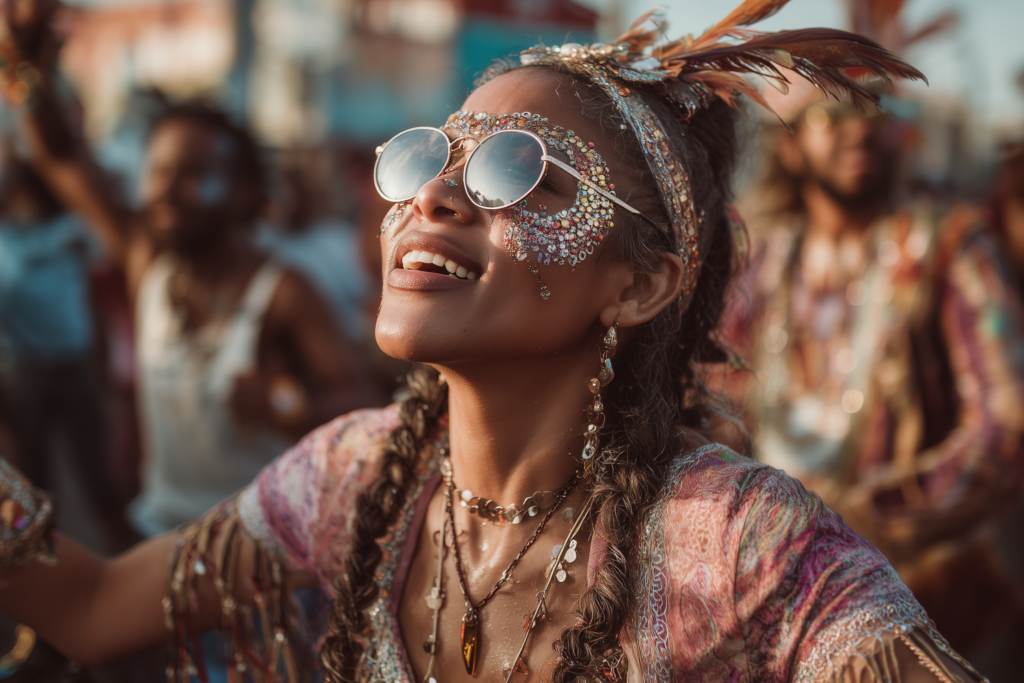
When most people hear the word Carnival, they picture feathers, music, dancing in the streets, and an atmosphere that feels larger than life. And yes, Carnival absolutely is all of that. But it is also so much more.
Carnival is not just one event, and it is not just one place.
It is a global tradition with deep historical roots, shaped by religion, colonialism, resistance, migration, artistry, and joy. In some places, Carnival feels elegant and theatrical. In others, it is deeply spiritual, political, communal, and unapologetically alive. What connects them all is the sense that, for a moment, the ordinary rules of life are suspended, and people step into something freer, louder, and more expressive.
If you have ever wondered where Carnival came from and how it became one of the most iconic celebrations in the world, here is the story.
The earliest roots of Carnival
At its broadest, Carnival is traditionally tied to the Christian calendar. It developed as the festive season leading up to Lent, the period of fasting, reflection, and penitence before Easter. In many Catholic societies, this was the final opportunity to feast, celebrate, and indulge before the more restrained season of Lent began.
That is one reason Mardi Gras, Carnival, and similar celebrations are often associated with abundance, excess, music, costumes, and revelry. They grew out of that contrast: one last burst of life and pleasure before a season of discipline.
But Carnival’s roots likely go even deeper than that.
Historians have long noted that many ancient societies held festivals built around seasonal change, role reversal, masking, public spectacle, and temporary social freedom. While the exact line from those older traditions to modern Carnival is not perfectly neat, the pattern is familiar: people disguise themselves, rules loosen, authority is mocked, and joy takes over the streets. That spirit of release and reversal remains central to Carnival to this day.
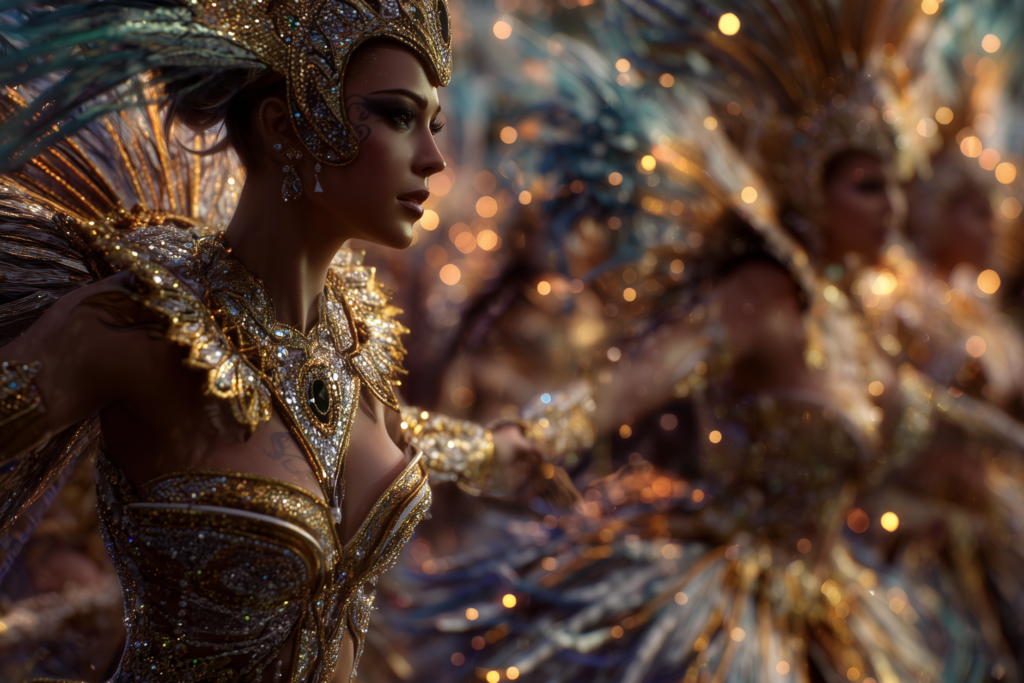
Carnival in Europe: masks, masquerade, and mischief
In medieval and early modern Europe, Carnival flourished especially in Catholic regions like Italy, France, Spain, and Portugal. These celebrations often included masquerade balls, parades, satire, music, feasting, costumes, and public mischief.
One of the most famous examples is Venice Carnival, known for its elaborate masks and sense of theatrical elegance. In Venice, masking was not just decorative. It allowed people to step outside their ordinary identities and move through society in a different way. Social boundaries blurred. The mask created freedom.
That idea — stepping outside yourself, outside the usual order of things — became one of Carnival’s most enduring themes.
But the story of Carnival changes dramatically once it crosses the Atlantic.
Colonialism transformed Carnival forever
European colonizers brought pre-Lenten Carnival traditions with them to the Caribbean and Latin America. French, Spanish, and Portuguese settlers imported masquerade customs, balls, and feasting into the colonies.
But once Carnival entered societies built on slavery, it became something different.
In many places, white elites held private celebrations while enslaved Africans were excluded from them. Yet Black communities did not simply stand outside the tradition. They reshaped it. They created parallel forms of celebration rooted in African music, movement, spirituality, masquerade, drumming, and community expression.
Over time, especially after emancipation, these traditions moved into public space and transformed Carnival from an elite celebration into something far more powerful.
This is one of the most important truths about Carnival worldwide: some of its most vibrant and influential forms were shaped not by the powerful, but by people who turned celebration into cultural memory, creative survival, and resistance.
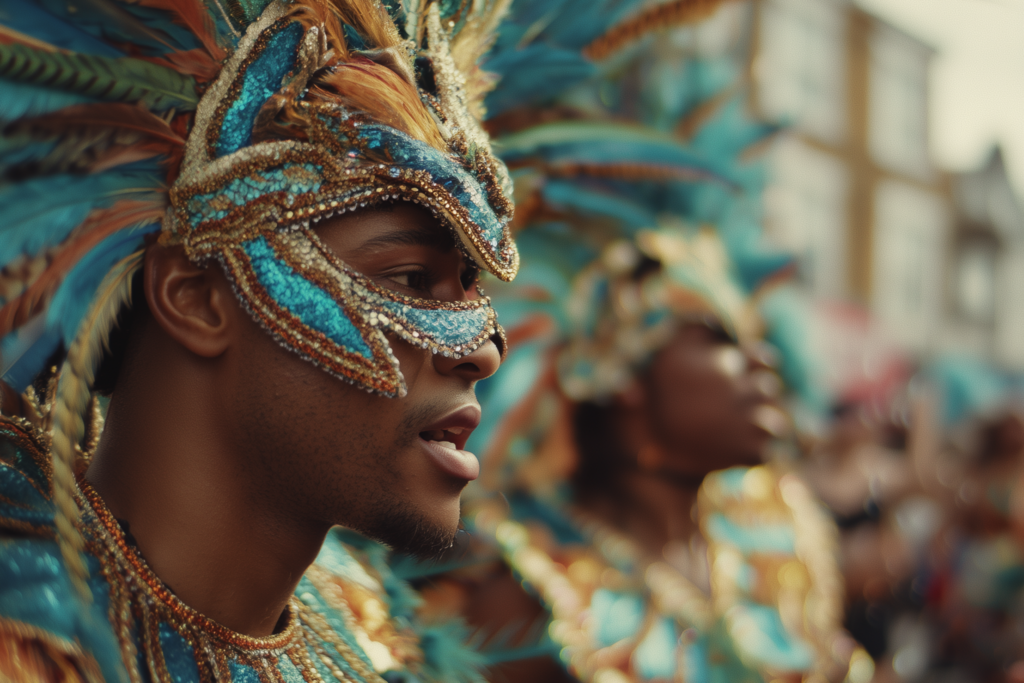
Trinidad Carnival: one of the most influential in the world
If you are talking about Carnival in the Caribbean, and especially in the Black diaspora, Trinidad and Tobago is one of the most important places to know.
Carnival in Trinidad began under colonial rule, with French planters and other elites holding pre-Lenten festivities. But after emancipation, formerly enslaved Africans and their descendants claimed the streets in new ways, bringing their own music, masquerade traditions, performance styles, and energy into public celebration.
This changed everything.
Trinidad Carnival became a space where Afro-Creole culture could be seen, heard, and felt. It grew to include traditions like Canboulay, stick-fighting, chantwell singing, calypso, steelpan, elaborate mas characters, and eventually the high-energy soca-driven experience many people associate with Carnival today.
It was not simply a party. It was history in motion.
Carnival in Trinidad carried the memory of enslavement, the experience of emancipation, the tensions of colonialism, and the brilliance of Black creativity. Even today, beneath the glitter and the music, there is something deeper there: a celebration of freedom, identity, and cultural survival.
And Trinidad’s influence has been enormous. Many of the Carnival experiences people know in cities like London, Toronto, Brooklyn, and Miami are directly shaped by Trinidadian Carnival culture.
Brazil: Carnival becomes spectacle on a massive scale
Brazilian Carnival developed differently, but it is just as important to the global story.
Like other parts of the Americas, Brazil inherited pre-Lenten customs from Europe. But over time, Carnival in Brazil became deeply shaped by Afro-Brazilian communities, music, and dance traditions. Nowhere is that more visible than in Rio de Janeiro, where Carnival evolved into one of the most famous celebrations on earth.
Rio Carnival is best known for its samba schools — neighborhood-based cultural organizations that spend months preparing costumes, floats, music, choreography, and storytelling for Carnival competition. These are not schools in the classroom sense. They are community institutions, and their performances are grand, artistic, and deeply rooted in local identity.
To watch the Rio Carnival is to see a spectacle on a breathtaking scale.
But even there, the story is bigger than sequins and parades. Samba itself emerged from Afro-Brazilian cultural life, and Carnival became one of the stages where that creativity took center place. In cities like Salvador and Recife, Carnival has taken on other distinct forms, each shaped by local history and regional culture.
So while Rio may be the image many people think of first, Brazil’s Carnival traditions are far from one-size-fits-all.
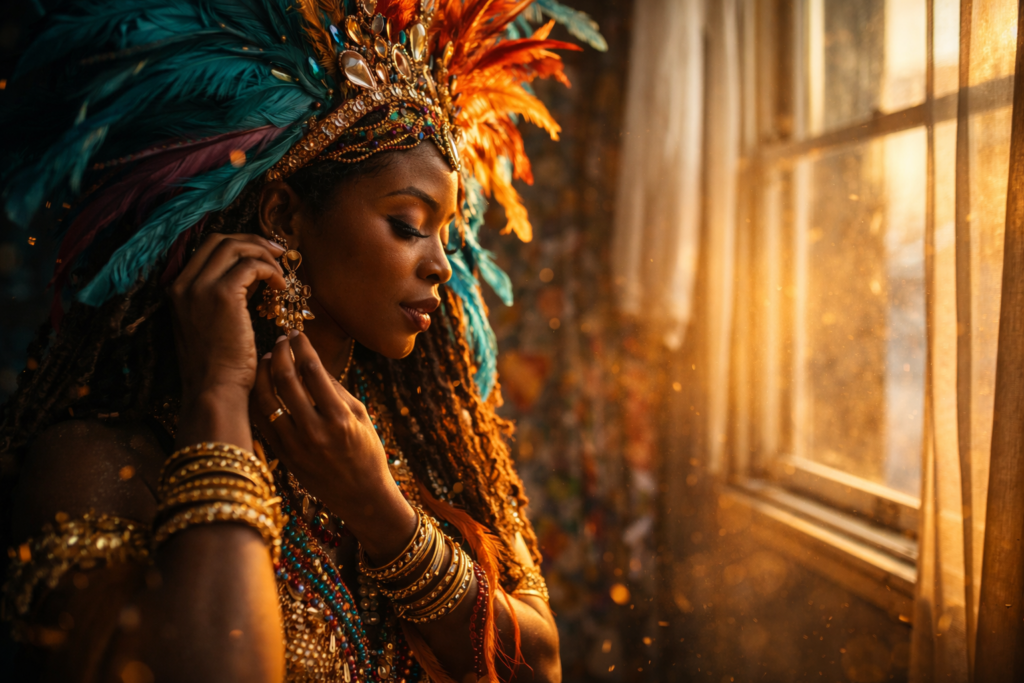
New Orleans and Mardi Gras
In the United States, the best-known branch of Carnival is Mardi Gras, especially in New Orleans.
The phrase “Mardi Gras” means Fat Tuesday, the last day before Lent. Like Carnival elsewhere, it developed from European pre-Lenten tradition, especially through French influence in the Gulf South.
New Orleans built its own style of celebration through parades, krewes, balls, throws, costumes, and neighborhood traditions. It has its own flavor, history, and rhythm, but it belongs to the larger Carnival family.
And as in so many other places, Black communities played a foundational role in shaping it. Organizations like the Zulu Social Aid & Pleasure Club became an essential part of Mardi Gras history, bringing distinctly Black cultural expression into one of America’s most famous celebrations.
Mardi Gras and Caribbean Carnival are not exactly the same, but they are cousins. Both draw from the same broader tradition of masking, music, public performance, and release before Lent.
Carnival across the Caribbean
Beyond Trinidad, many Caribbean nations have their own Carnival traditions, each with its own personality.
Some retain strong ties to pre-Lenten observance. Others are celebrated at different times of the year. Some are centered on traditional masquerade and community performance. Others have become major tourism events with costume bands, premium parties, and curated experiences for international visitors.
And that is part of what makes Carnival so fascinating: the word may be the same, but the experience can be completely different depending on where you go.
For some travelers, Carnival means culture, history, and traditional mas. For others, it means music trucks, all-day fetes, beautiful costumes, and nonstop energy. For many, it is a mix of both.
That is why “I want to go to Carnival” is really just the beginning of the conversation.
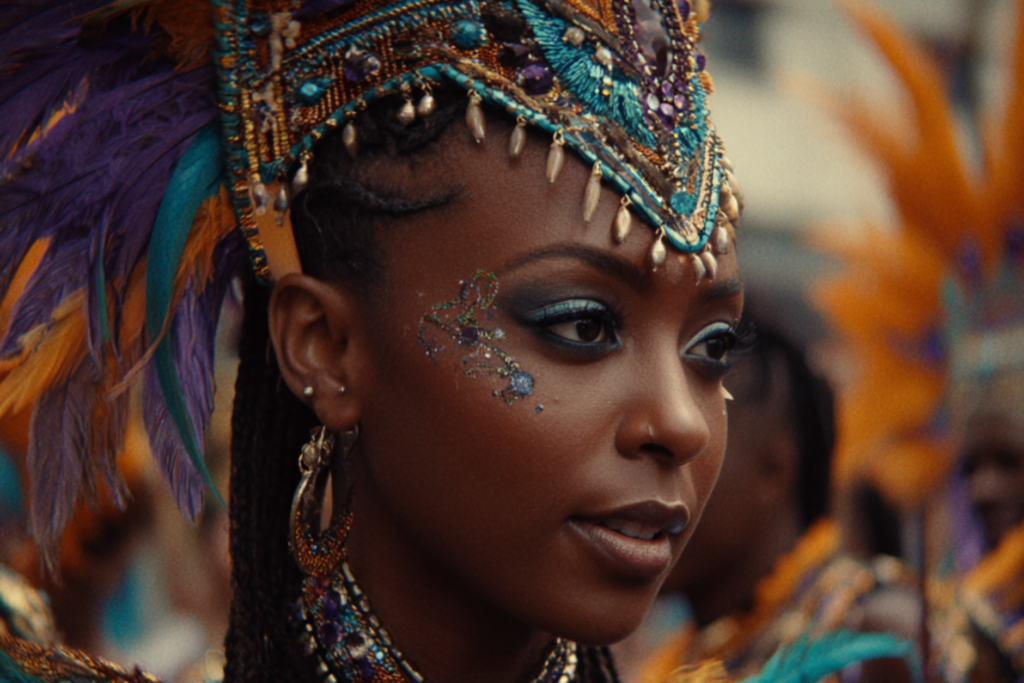
Carnival in the diaspora: when people carried it with them
One of the most powerful parts of Carnival’s history is what happened when Caribbean people migrated abroad.
They brought Carnival with them.
In London, Carnival took root in the late 1950s and 1960s against the backdrop of racial tension and anti-Black violence. The event that would become Notting Hill Carnival grew in part out of efforts to affirm Caribbean culture, dignity, and joy in a hostile environment. It was not just a celebration. It was presence. It was defiance. It was community.
In Brooklyn, Caribbean immigrants built what became the West Indian American Day Carnival, now one of the largest Caribbean celebrations in North America. What began with indoor events eventually grew into the massive Labor Day tradition that now fills Eastern Parkway with music, mas, and diaspora pride.
This is another reason Carnival matters so much. It is not only something people attend. It is something people carry. Something they rebuild. Something they refuse to lose.
Why Carnival matters beyond the party
Carnival is easy to market as a good time, and to be fair, it absolutely is. It is joyful, vibrant, stylish, and unforgettable.
But its deeper meaning is part of what gives it staying power.
At different times and in different places, Carnival has been about freedom, role reversal, satire, memory, cultural pride, resistance, artistry, survival, and public joy.
For communities shaped by colonialism, enslavement, racism, migration, and exclusion, Carnival has often become a way to say: We are here. Our culture matters. Our joy matters. Our stories matter.
That is a powerful thing.
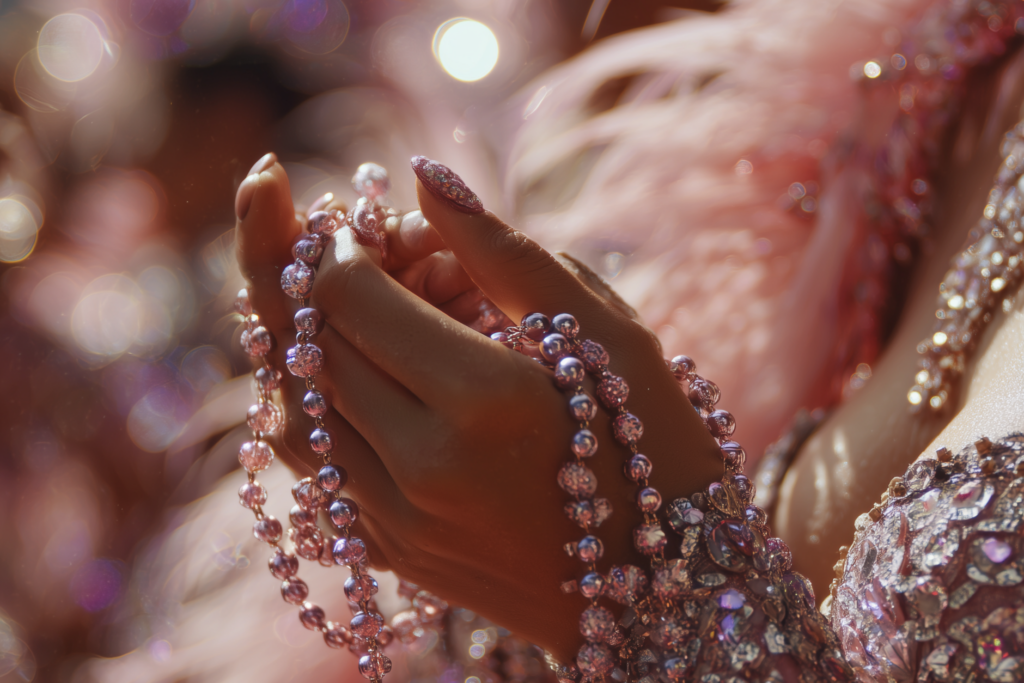
Carnival today: global, glamorous, and still evolving
Today, Carnival is both a tradition and an industry.
It is culture and commerce.
It is community-rooted and globally marketed.
Tourism boards promote it. Travelers build full vacations around it. Costume bands, VIP experiences, all-inclusive fêtes, luxury packages, and social media have all reshaped how many people experience Carnival. In some places, that growth has brought visibility and economic opportunity. In others, it has raised important questions about authenticity, access, commercialization, and who Carnival is really for.
Those tensions are part of the modern story, too.
And yet, despite all the changes, Carnival remains one of the clearest examples of how history, culture, music, and community can come together in living color.
The bottom line
Carnival began as a pre-Lenten season of feasting and celebration in Europe, but its global story became far richer as it moved through the Caribbean, Latin America, and the diaspora.
It was transformed by the people who were excluded from power but refused to be excluded from expression.
It became a site of artistry, identity, memory, and joy.
And that is why Carnival is more than a party. It is a story — one told through music, movement, costume, rhythm, and the simple but profound act of taking up space in the street.
So when someone says they want to “go to Carnival,” the real question is not just where they want to travel.
It is what kind of Carnival story they want to step into.
Interested in a Carnival experience but not sure where to start? I’d love to help you narrow down the best option for you.
Ready for your next adventure?